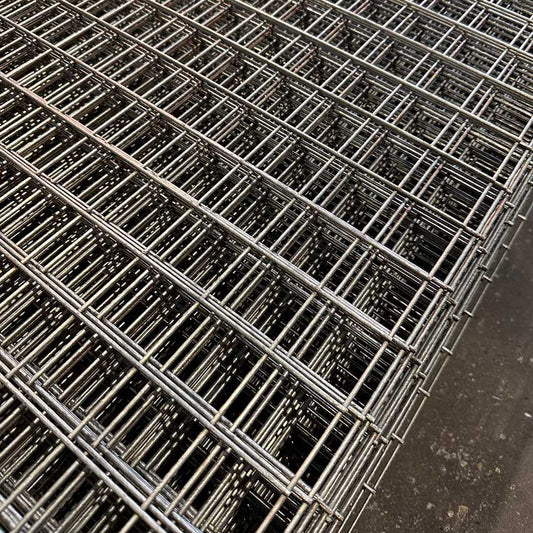
Weldmesh Fencing

Weldmesh Fencing Panels – Galvanised & HDG

Heavy-duty, low-maintenance, and built for security. Weldmesh fence panels are the go-to fencing solution for industrial sites, schools, sports facilities, and commercial properties across Australia. We stock galvanised and hot-dip galvanised (HDG) weldmesh panels in Sydney, ready for pickup or delivery.

What is Weldmesh Fencing?

Weldmesh fencing is made from steel wire rods welded together at each intersection to form a rigid grid panel. Unlike chainwire fencing — which is woven and flexible — weldmesh panels are structurally rigid and hold their shape under impact. Weldmesh is harder to cut, harder to climb, and more visually imposing. It's the standard choice when a fence needs to do a serious job.

9 products

HDG Weldmesh Panels — 2400 x 1800mm

Our most popular weldmesh panel: 2400mm wide x 1800mm high, hot-dip galvanised (HDG). The 2400x1800 size is the Australian industry standard for weldmesh security fencing.

  • Panel dimensions: 2400mm x 1800mm
  • Wire diameter: 4mm or 5mm (available in both)
  • Mesh aperture: 50mm x 50mm (standard)
  • Finish: Hot-dip galvanised (HDG)
  • Zinc coating weight: Min 450g/m² (AS/NZS 4680)
  • Panel weight (approx.): 14kg (4mm) / 21kg (5mm)

Galvanised vs HDG — Which Should You Use?

Electrogalvanised (standard galvanised): Thinner zinc coating via electroplating. Suitable for sheltered or low-corrosion environments. Lower cost.

Hot-Dip Galvanised (HDG): Panel is submerged in molten zinc — much thicker coating and significantly better corrosion resistance. The right choice for outdoor fencing in Australian conditions, especially coastal or chemically exposed sites.

Weldmesh vs Chainwire — What's the Difference?

  • Construction — Weldmesh: Welded rigid grid | Chainwire: Woven flexible mesh
  • Rigidity — Weldmesh: High — panels hold shape | Chainwire: Flexible — gives under pressure
  • Security level — Weldmesh: Higher | Chainwire: Moderate
  • Appearance — Weldmesh: Clean, uniform grid | Chainwire: Diamond pattern, industrial
  • Common uses — Weldmesh: Schools, sites, commercial | Chainwire: Perimeters, boundary marking
  • Cut resistance — Weldmesh: Higher | Chainwire: Lower

Installation Guide — Weldmesh Fencing

Weldmesh fencing installation follows a straightforward post-and-panel method. Set your posts first — 50x50mm SHS galvanised posts at 2400mm centres, embedded a minimum of 600mm into concrete footings. Allow the concrete to cure fully before attaching panels.

Panels are secured to posts using wire clips or panel clamps, positioned at the top, middle, and bottom of each panel. On longer runs, add a galvanised flat bar horizontal rail between the top of the post and the top of the panel for additional rigidity — particularly important on installations over 1.8m in height or where the fence line is exposed to wind.

Gates should be hung on 75x75mm SHS gate posts, set at least 750mm into concrete on each side of the opening. Pre-framed weldmesh gates make installation straightforward — hinges and latch hardware are included. Ensure the gate swings clear of the ground across its full arc before the concrete sets.

For commercial or government projects requiring AS 1725 compliance, contact our team before ordering — we can confirm which panel and post specifications meet the relevant security fencing standard for your application.

Post Accessory Questions

Standard 2400x1800 HDG weldmesh panels typically cost between $35 and $70 per panel, depending on quantity and wire gauge. Posts, rails, and installation are separate costs.

Weldmesh is a rigid welded grid panel; chainwire is a flexible woven mesh. Weldmesh offers higher security, better cut resistance, and a cleaner appearance. Chainwire is more economical for basic perimeter marking.

HDG stands for hot-dip galvanised. The steel wire is submerged in molten zinc to create a thick, durable protective coating. HDG panels comply with AS/NZS 4680 — the standard specification for outdoor weldmesh fencing in Australia.

Our standard weldmesh panels have a 50x50mm mesh aperture — the most common specification for Australian security fencing. Different aperture sizes are available on request.

Weldmesh panels can be cut on site using angle grinders or bolt cutters. Contact us to discuss custom panel options for non-standard sizes or project-specific requirements.

Common Applications for Weldmesh Fencing

  • Schools and childcare centres — rigid panels are harder to climb than chainwire
  • Industrial and commercial sites — secure perimeter fencing where rigidity and visibility matter
  • Government and council properties — parks, depots, storage yards
  • Sports facilities — courts, ovals, training grounds
  • Construction site fencing — temporary or permanent perimeter security